
Tree Crown Reduction
Crown reduction is a pruning technique used to decrease the overall size and spread of a tree’s canopy. This process involves selectively shortening the tree’s branches back to suitable growth points, reducing the height, width, or both to maintain or restore the tree’s natural shape. Crown reduction is carried out in accordance with BS3998 arboricultural best practice standards. It helps preserve the tree’s health and structural integrity while also managing its size for safety and allowing more light into your house and garden. During a crown reduction, deadwood and broken or compromised branches are also removed.
A properly carried out crown reduction helps to:
• Reduce mechanical stress on limbs and the tree’s structure
• Manage the tree’s size in confined spaces
• Improve light penetration and airflow
• Reduce the risk of branch failure
• Maintain the tree’s natural form as much as possible
During the procedure, no more than the recommended percentage (usually 10–30%, depending on species and condition) of the canopy is removed. All cuts are made to promote healthy regrowth and minimise decay.
Before Reduction
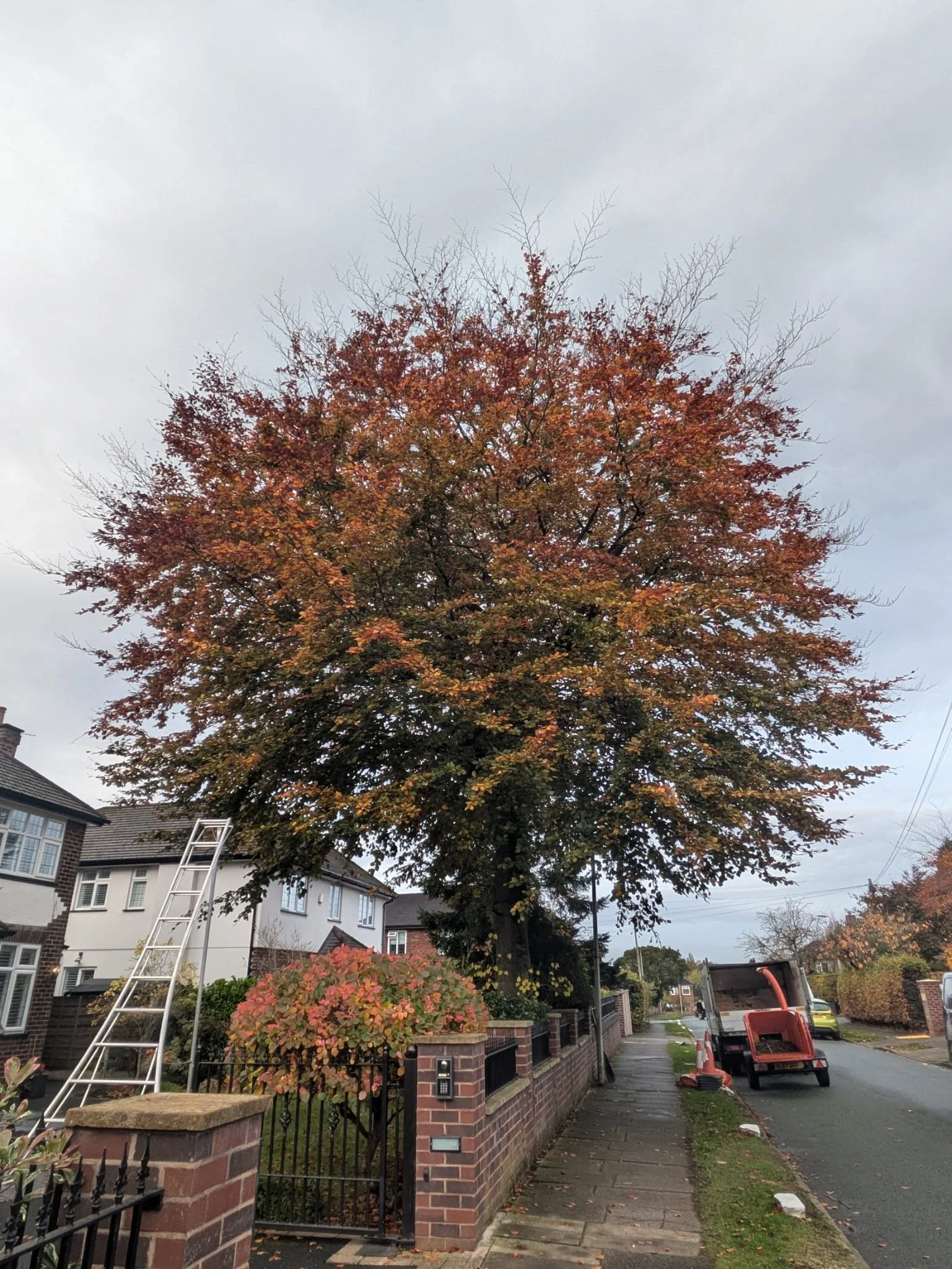
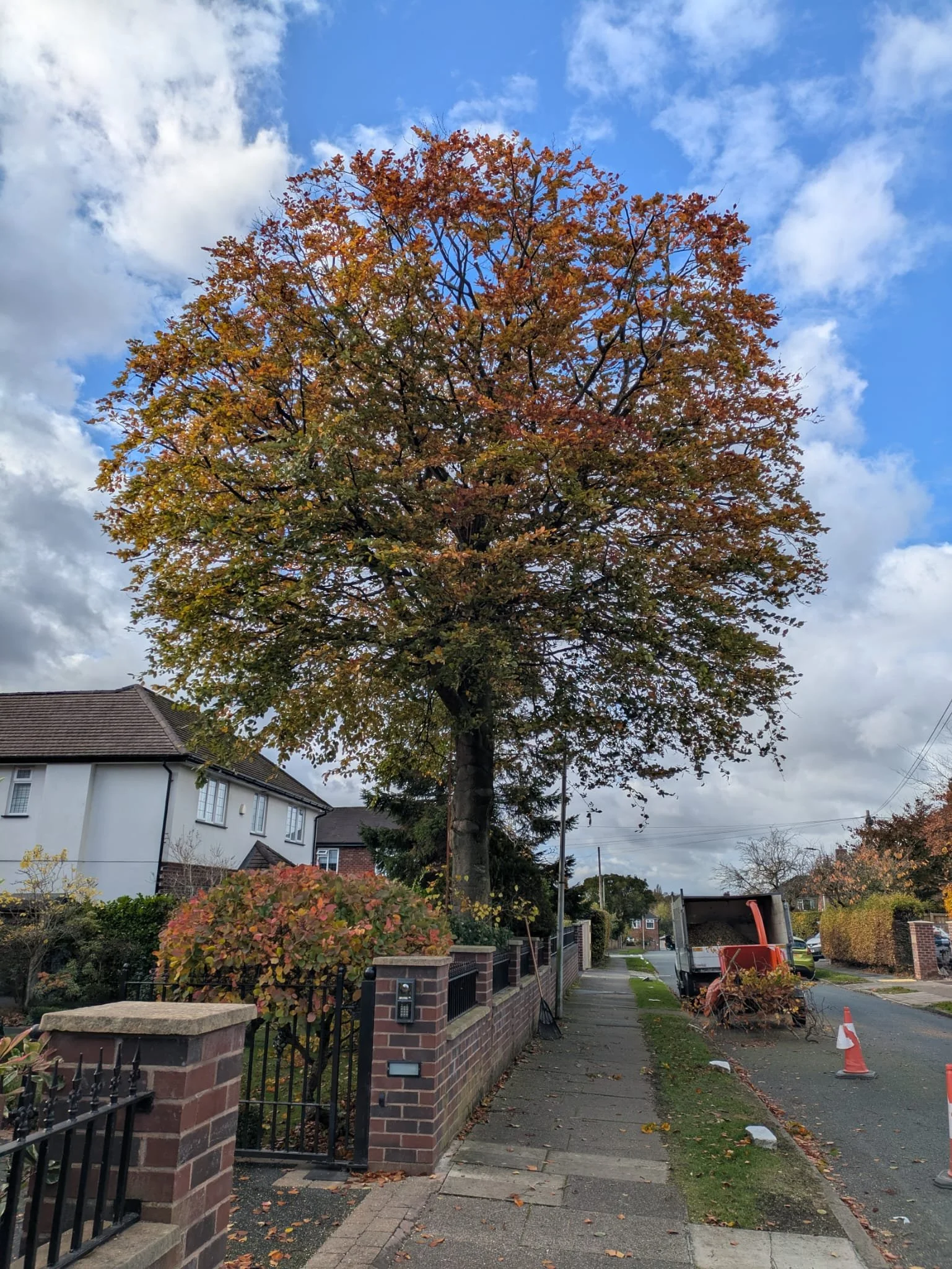
After Reduction