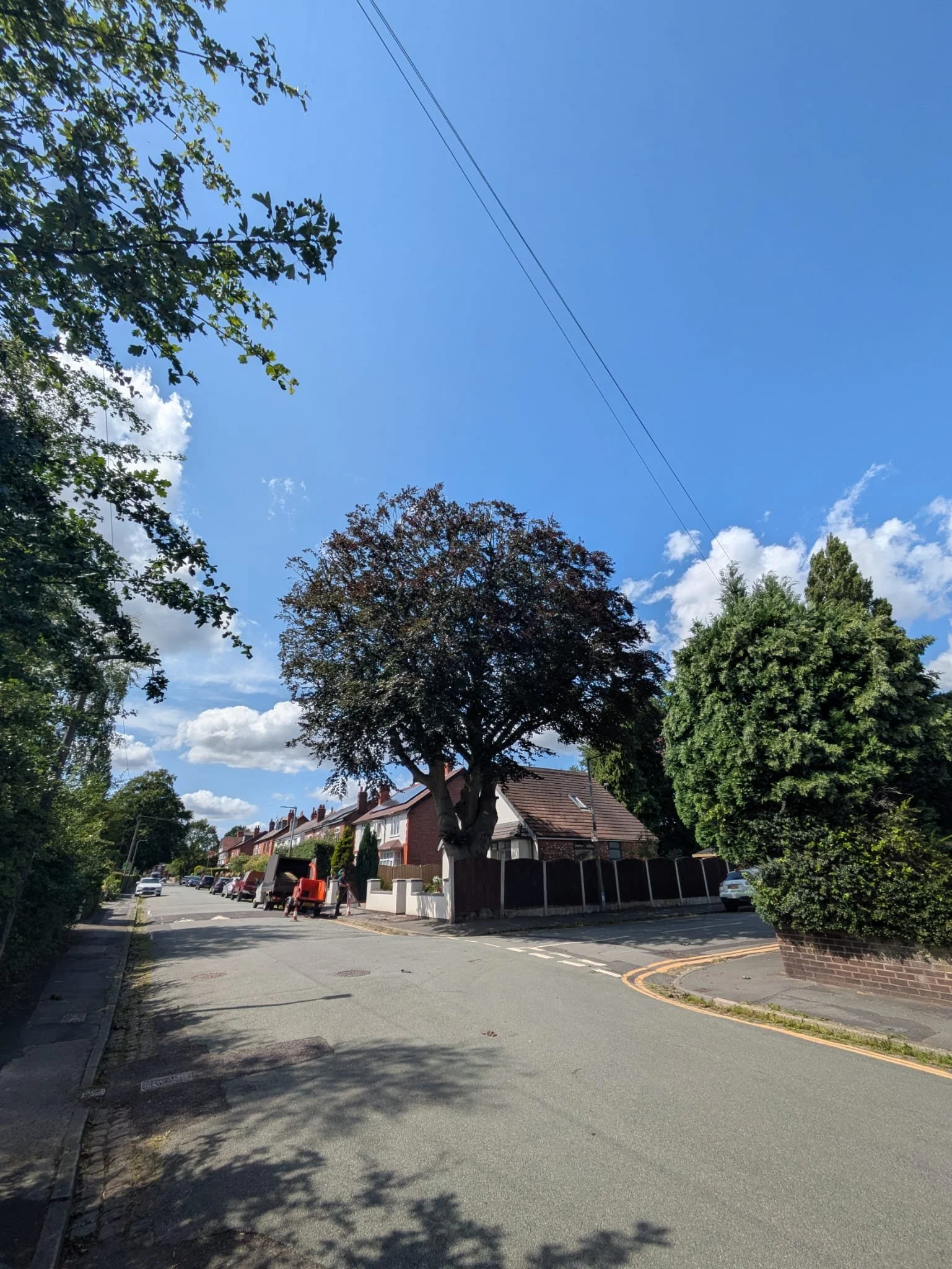
Tree Pollarding
Pollarding is a pruning technique in which a tree’s upper branches are removed back to a predetermined height to create a compact, manageable framework of regrowth. Once the initial pollard framework is established, the tree should then be re-cut on a regular cycle (often every five years, depending on the species) to maintain its size and shape.
Pollarding is used to control the height and spread of a tree in urban or restricted spaces, such as street settings. It is a suitable technique for fast-growing trees that require ongoing maintenance but where a crown reduction would need to be carried out too often, often requiring more material to be removed in order to create a five-year management plan.
A correctly executed pollard leaves the main stem and selected scaffold branches intact, with cuts made just above previous pollard points. This promotes consistent regrowth while protecting the tree from unnecessary stress. Only species that respond well to heavy pruning—such as willow, lime, poplar, and plane—should be pollarded.