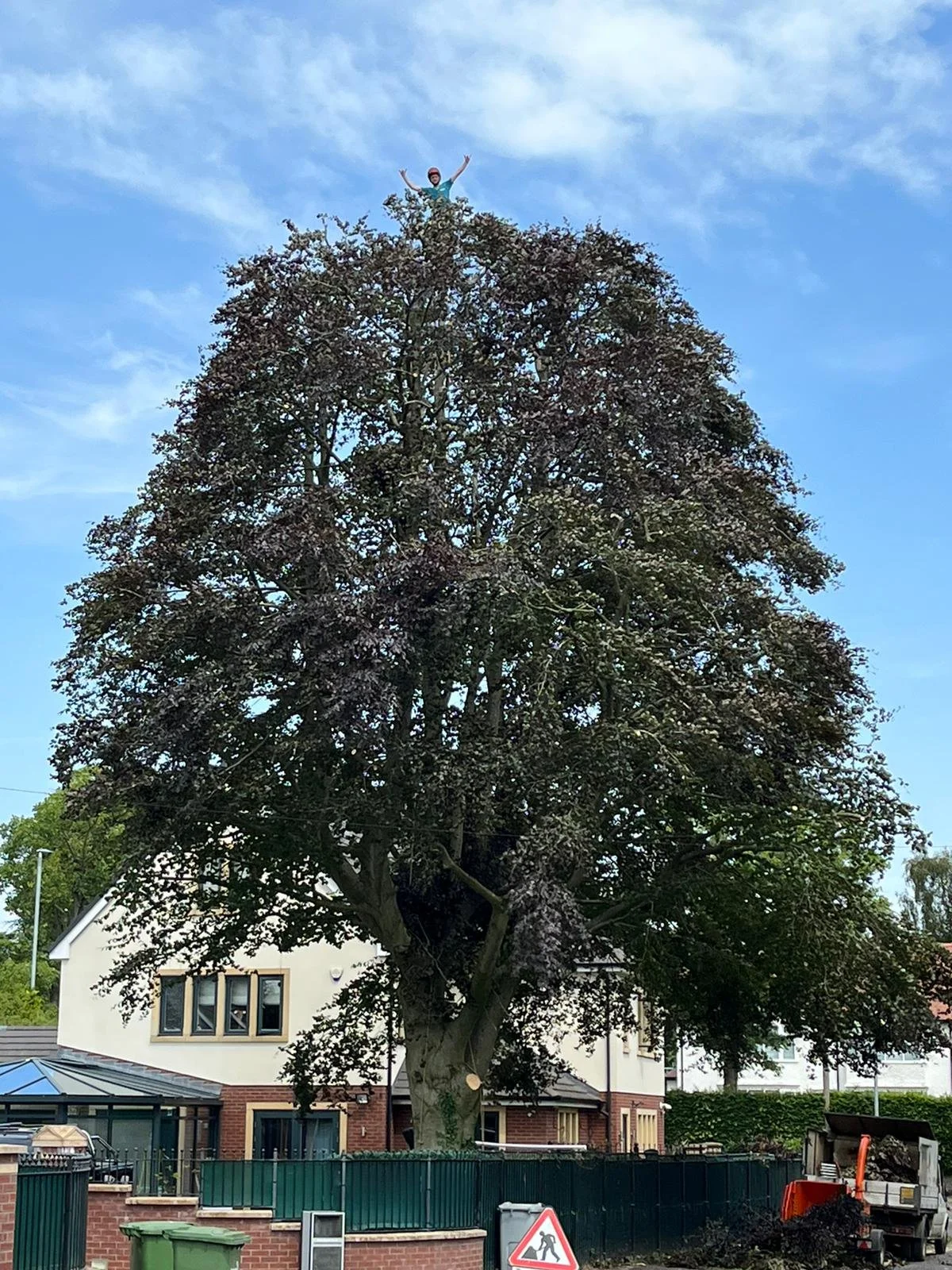
Crown Thinning
Crown thinning is a selective pruning technique used in tree care to reduce the density of a tree’s canopy without altering its natural shape or size. By carefully removing smaller, weaker, or crossing branches throughout the crown, arborists improve light penetration and air circulation within the tree.
This process reduces wind resistance, which can lower the risk of storm damage, and decreases excess weight on heavy limbs, helping to prevent breakage. Crown thinning also enhances overall tree health by allowing sunlight to reach inner foliage and the ground below, supporting better growth and reducing the likelihood of fungal diseases that thrive in damp, shaded conditions.
The technique requires precision and knowledge of tree structure, as over-thinning can stress the tree. Typically, no more than 15–25% of the live canopy is removed during a single session to maintain balance and vitality.